Contact Us
Comprehensive solution-based rubber lining manufacturer
Machinery & Equipment
We accept orders from companies located in Japan.
Updated: March 31, 2026
2025
Updated: March 31, 2026
2025
Rubber lining is a method of protecting equipment by adhering rubber to the surfaces of metal pipes, tanks, and similar structures, thereby preventing corrosion and friction caused by the contained liquids. Dainichiboshokukako is a comprehensive solution provider, handling everything from rubber manufacturing to installation and repairs, going beyond mere product supply. Possessing recipes (material specifications) for hundreds of rubber compounds, it provides rubber lining tailored to each customer and operating environment, serving chemical plants, wastewater treatment facilities, power stations, steelworks, and more.
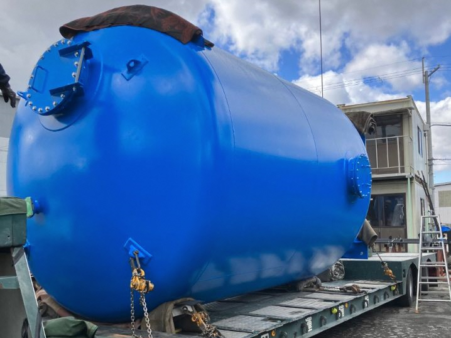
Dainichiboshokukako possesses in-house facilities for rubber manufacturing, including rubber compound mixing, rubber sheet cutting, and vulcanisation. At its Takatsuki headquarters factory, the company undertakes integrated production, designing and manufacturing storage tanks, flue gas desulphurisation equipment, and piping, applying linings to their inner surfaces before shipment. Furthermore, it has established a system to dispatch personnel to sites for lining installation and repair work.
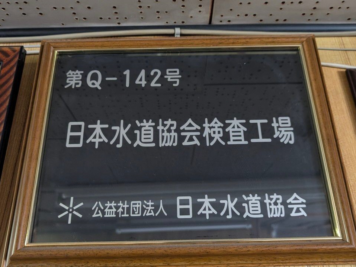
Ethylene propylene diene monomer (EPDM) rubber, renowned for its excellent weather resistance, chemical resistance, and heat resistance, has historically been avoided as a lining material due to its poor adhesion properties. To leverage EPDM's characteristic durability, which is 5 to 10 times greater than other rubber materials, we developed an adhesive technology enabling EPDM to be applied as a single material. This avoids compromising physical properties by blending other synthetic rubbers to enhance adhesion. As a lining manufacturer specialising in EPDM, we hold product manufacturing certification from the Japan Water Works Association.
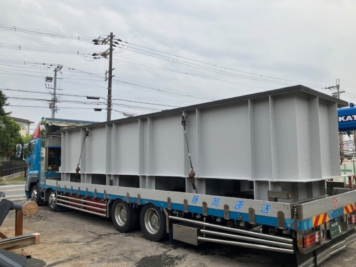
The process of adding vulcanising agents to rubber and heating it to improve elasticity, strength, durability, and other properties is called vulcanisation. Dainichiboshokukako possesses a can-shaped vulcanisation facility measuring 3.5 metres in diameter and 8 metres in length, enabling the lining of large-scale equipment. Furthermore, in the process of stretching rubber material into thin sheets, specialised equipment is employed for thickness adjustment. This apparatus is customised to match Dainichiboshokukako's rubber compounds, achieving a thickness tolerance of less than 0.1mm. This significantly enhances workability and quality during the lining process.
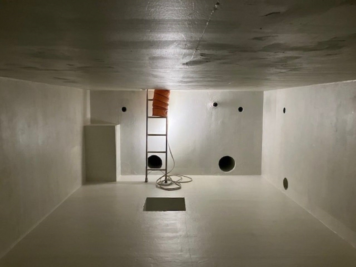
Dainichiboshokukako undertakes not only rubber materials but also resin manufacturing and post-lining painting. It applies proprietary technology to lining construction using materials that incorporate fine flake-shaped glass fragments into liquid resin. Chemical treatment enhances the adhesion between the resin and glass flakes. Within the 1.5–3 mm thick lining layer, over 280 overlapping glass flakes form a robust coating that prevents the permeation of water vapour and gases, which are factors contributing to corrosion. The company's patented technology has also overcome the traditional weakness of flake resin in terms of alkali resistance, enabling a broad range of applications.