Contact Us
Supporting the three major industries through mould design and production for mass-produced items
Updated: March 13, 2026

2025
Updated: March 13, 2026
2025
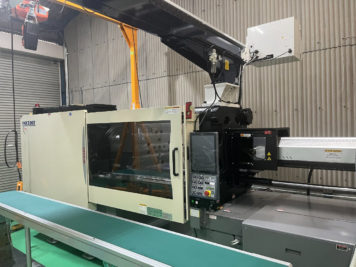
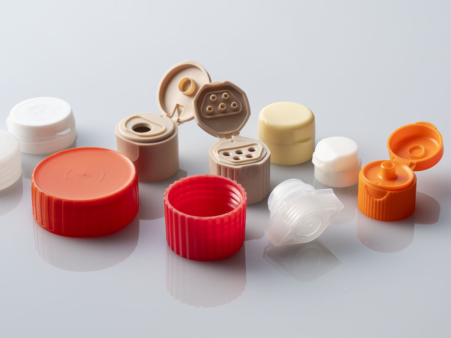
TOYO MOLD INDUSTRIAL handles everything from mould design and manufacture for mass-produced items such as medical device components and precision machine parts to support for mass production start-up. The company boasts a strong track record in mass-production moulds for caps and containers serving three key industries: daily necessities, food, and pharmaceuticals/cosmetics. Its reputation for producing uniform moulds through lathe machining and precision processing is well-established, forming the basis for commissions in mould design and manufacturing for mass-produced items. Furthermore, the company utilises its own injection moulding machines to conduct trial moulding runs. This capability to verify using trial parts is highly valued, as it helps shorten the process leading up to the launch of the final moulded product.
TOYO MOLD INDUSTRIAL is renowned for its mould design and manufacturing suited to mass production. It particularly excels in the design and production of multi-cavity moulds capable of producing multiple parts from a single mould face. By supplying multi-cavity moulds such as those with 24 or 32 cavities per face, it has contributed to mass production exceeding tens of thousands of parts per hour.
With multi-cavity moulds, uniform moulded parts must be achieved across all cores and cavities. Furthermore, as these are everyday products, moulding defects are unacceptable. The company minimises such defects through μm-level precision machining technology and advanced design that carefully balances the mould's structure. For moulds requiring dimensional tolerances of ±0.01mm on the moulded part, achieving tolerances within 0.005mm is demanded. TOYO MOLD INDUSTRIAL's strength lies in its ability to meticulously manage machining precision to this level.
Furthermore, ensuring machining precision enables rapid mould handover. While the company handles everything from trial moulding onwards, mould adjustments and modifications often require significant man-hours. The company is highly regarded for limiting post-trial mould modifications to a maximum of two instances, enabling moulding manufacturers to commence production according to schedule.
Furthermore, its expertise in implementing hot runner systems is also highly valued. Hot runner systems offer significant benefits for mass-production manufacturers, including reduced material costs through minimised runner waste and improved productivity via shorter cycle times. The company flexibly accommodates proposals incorporating hot runner systems.

In the production of components such as caps and hinges, it is essential to form screw shapes, hinge sections, and mating surfaces with high precision. The manufacture of cavities comprising 0 to 15 parts demands high machining accuracy for each component. TOYO MOLD INDUSTRIAL possesses precision machining technology guaranteeing accuracy to the micrometre level, enabling the realisation of multi-cavity moulds that achieve both high productivity and improved yield rates.
Furthermore, TOYO MOLD INDUSTRIAL's expertise in water channel design within moulds contributes to enhanced productivity. To rapidly extract numerous moulded parts, an efficient cooling system must be integrated within the mould. This is achieved through optimised water channel design technology and precision machining techniques.

TOYO MOLD INDUSTRIAL has developed and implemented a proprietary system for remotely monitoring and operating machining equipment using commercially available cameras and smart switches, as part of its factory digital transformation (DX) initiative. Previously, errors occurring during night-time operations were detected late, necessitating corrective machining. Following system implementation, operational status can be verified remotely via video and audio. By performing operations such as emergency stops and restarts of the machining equipment, the occurrence of corrective machining has been reduced, leading to a reduction in the burden on operators.
Further advancement of factory digital transformation through in-house development will drive productivity improvements.